
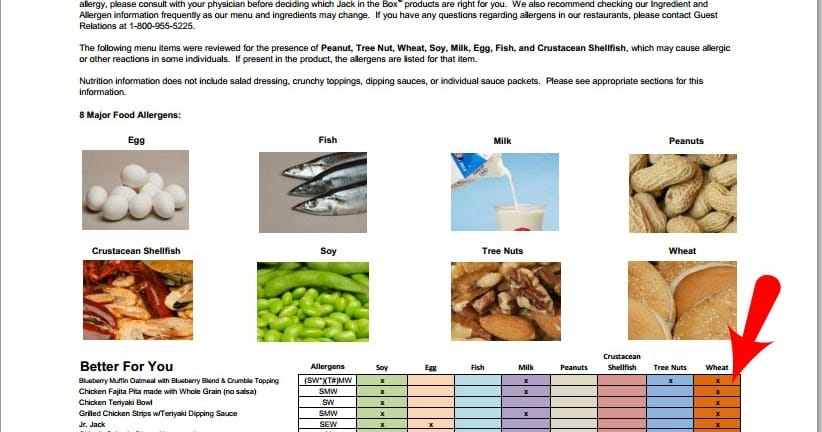


Not only is Jack in the Box interested in giving you tasty meals at really affordable prices, but it also prioritizes your well-being. That’s why the Jack in the Box Allergen Menu was created to cater to the health needs and, by extension, dietary restrictions of customers with such cases. This menu allows customers with special diets, such as vegetarians, vegans, gluten-free, and dairy-free eaters, to know what to eat and what to avoid.
Common Allergens Identified by Jack in the Box
Eggs
Characterized by facial swelling, hives, stomach cramps, diarrhea, etc, as allergic reactions. This food is restricted to customers with diagnosed allergies and is caused by certain protein strains like ovoglobulin.
Soy
Soy is a major allergen and its side effects include eczema, vomiting, and a runny nose. It contains certain proteins called glycinin and is restricted to customers diagnosed with allergies.
Wheat
This allergen contains gluten, which can cause an immune reaction. It is restricted to Gluten-Free eaters and is characterized by itching, swelling, anaphylaxis, diarrhea, etc.
Tree Nuts
Tree-nut allergic reactions are characterized by hives, body swelling, diarrhea, and stomach cramps. They are caused by amandine (almonds), etc., and are restricted to those with diagnosed allergies.
Fish
It is caused by a protein called parvalbumin, which is resistant to heat and digestion. It also causes swelling, hives, diarrhea, cramps, and anaphylaxis, and is restricted to customers with diagnosed allergies.
Peanut
Peanuts are restricted to customers with diagnosed allergies. Certain proteins cause hives, swelling, cramps, and anaphylaxis.
Crustacean Fish
This allergen causes hives, swelling, cramps, anaphylaxis, and diarrhea. It is caused by parvalbumin, a protein resistant to heat and digestion. It is a prevalent allergen and should be restricted to customers with diagnosed allergies.
Understanding Cross-Contamination Risks
Cross-contamination is not an everyday word, so most people don’t understand it in this context. It occurs when the food of someone with an allergy is most likely contaminated with the allergen they react to. This may pose a serious health risk and lead to severe cases of health depletion, and it must be avoided by all means.
How Does Cross-Contamination Occur?
- When the surface used in preparing the food containing the allergen is still used to prepare the meal of the consumer with the allergy
- Another case could be when the same utensils or oil are used to cook the same meals. This can lead to severe cross-contamination.
- On the consumer’s side, it can be caused when the customer doesn’t communicate clearly with the staff about their dietary issues or even go through the Jack in the box 2025 allergen menu to at least know what to and what not to eat.
However, these cases can be prevented by proper communication and extra mindfulness in the kitchen during meal prep.
Customizing Orders for Allergen Concerns
Customizing Orders for customers with allergen concerns is one of the most effective ways to avoid Cross-Contamination risks and help prevent allergic accidents on-site.
Provide all Necessary Allergen information
Using the Jack in the Box Allergen Menu as an example, this should be provided to every customer, with proper ingredient lists for every meal on the menu and allergens indicated.
Handling of meals
Meals should be prepared with utmost care and hygiene, avoiding cross-contamination. Spaces used to prepare foods should be thoroughly sanitized to avoid Contamination.
Customer Care
For customers’ well-being, staff should be trained to handle on-site reactions, and allergy alternatives should be made for customers with diagnosed allergies.
- Grilled Chicken strips with Teriyaki dipping sauce
- Chicken Fajita Pita made with Whole Grain (no salsa)
- Jr. Jack
- Chicken Teriyaki Bowl
- Curly Fries
- French Fries
- Tacos without cheese and toppings
- Grilled Chicken salad with no croutons or dressing
- Strawberry banana smoothie
- Mango smoothie
FAQs
How can I access Jack in the Box Allergen information?
You can get Jack in the Box Allergen information through the mobile app, the official website, or in-store at any participating location.
Do Jack in the Box shakes contain common allergens?
Yes, Jack in the Box shakes, like those from most other restaurants, contain high allergens, as they contain tree nuts and peanuts.
Can I customize my order to accommodate my allergen?
No, your Jack in the Box meal would not accommodate your allergens. For any customer with allergies, they would have their allergens strictly restricted from their meals.
Are Jack in the Box Fries safe for individuals with Gluten-Free allergies?
Yes, Fries are one of the top allergen-free meals on the Jack in the Box menu, and individuals with Gluten-Free allergies can most certainly eat them without reactions.
Are staff trained to control allergic reaction situations if they happen on-site?
Yes, Jack in the Box staff are trained to prevent allergic reactions at the basic level, like avoiding cross-contamination, and they are also trained to manage allergic accidents if they ever occur on-site.
Conclusion
Jack in the Box Allergen Menu is crafted with the health and well-being of its customers to avoid any form of danger to their lives. Jack in the Box Allergen Menu isn’t the only measure applied to prevent allergic accidents; staff training is applied to contain these allergic accidents if they ever occur. With this menu, you know what to eat and what not to eat at Jack in the Box with the Jack in the Box menu.


